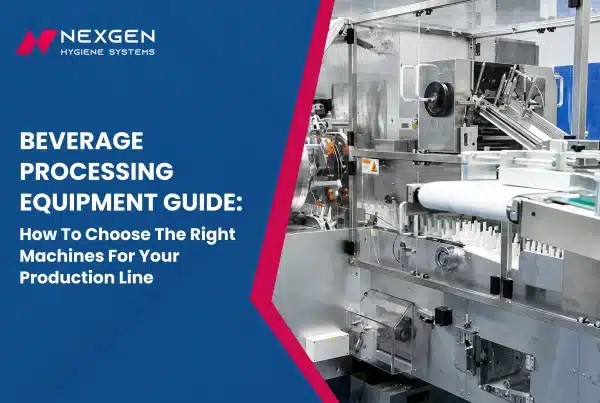
Many beverage plants buy processing equipment one machine at a time. They start with a filler, then add a labeller, and then whatever fixes the next problem they see. As a result, the plant has a filler that handles 10,000 bottles an hour, for instance, but a machine later in the line can only manage 7,000. This creates a bottleneck.
In short, the entire production is as slow as its slowest step (the process’s bottleneck).
Therefore, instead of asking, “Which machine should we buy next?” plant managers and procurement teams should ask, “What does the entire production line need at each stage and how can those stages work together?”
Moreover, the answer starts with the beverage itself.
For example, a fruit juice line might need washing, preparation, pulping, and extraction. Other drinks could require blending, filtration, homogenisation, pasteurisation, carbonation, or special handling.
The product, ingredients, and production method determine what happens on the line and what equipment is needed. Bottling, drying, and packaging requirements also determine the equipment choices.
Map Out the Beverage Production Process
Raw Material Preparation
Fruit-based beverages can require sorting, washing, peeling, cutting or other preparation before extraction.
The equipment here should handle the required volume and maintain consistent processing.
Food Processing Machines include operations such as washing, cutting, pulping, and material handling.
Pulping and Extraction
For fruit-based drinks, extraction decides how much usable pulp or juice you can get from the raw material.
So, when you look at equipment options, consider:
- Processing capacity
- Product recovery
- Separation efficiency
- Manual intervention
- Cleaning requirements
For example, a Custard Apple Pulper separates pulp from seeds and skin and has a pulp capacity of 50 kg/hr. Switching from manual pulping to automated processing with a pulp capacity of 50kg/hr saves labour and processing time, reduces waste, and improves consistency.
Processing and Formulation
The next step depends on the type of beverage you’re making.
Depending on the formulation, a plant may use:
- Mixing and blending systems
- Filtration
- Homogenisation
- Pasteurisation or other heat treatment
- Cooling
- Storage
Choose these processes based on your product recipe and required processing conditions, rather than selecting a standard equipment package.
Bottling: More Than Filling a Container
After processing the beverage, the next steps are filling and handling the containers.
Typical stages can include:
- Bottle or can preparation
- Filling
- Capping
- Conveying
- Inspection
- Coding
- Labelling
At this stage, you shouldn’t look at just one machine’s speed. If a filler works faster than the next machine, it can cause backups and stoppages.
That’s why it’s important to think about bottling together with the steps that come after.
Drying Comes Before the Label
After rinsing, filling, or handling, chilled containers can retain surface moisture.
Moisture can interfere with labelling and coding, so drying is an important step between bottling and packaging.
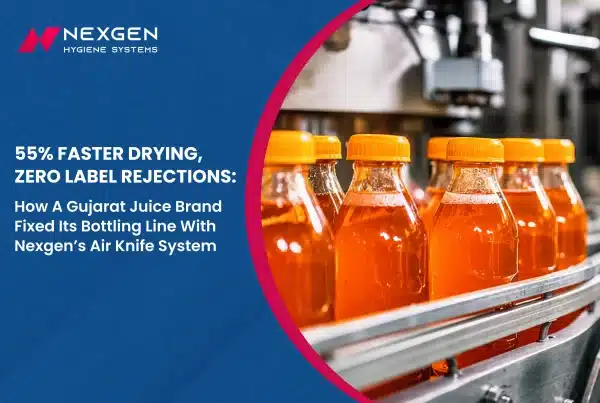
Air Knife Drying Systems for the Beverage Industry are designed for PET and glass bottles and aluminium cans/ The system is usually integrated into conveyor lines to dry the bottles before labelling and packaging.
Air knives use a controlled sheet of high-velocity air to remove surface moisture without physical contact. The system can be configured around factors such as container type, line speed, and the amount of moisture that needs to be removed.
For a beverage plant, the main question isn’t just if drying is needed, but where it should go in the line and what level of drying the next step needs.
Packaging Is the Last Stage, Not an Isolated One
After drying, containers may move through:
- Coding
- Labelling
- Inspection
- Secondary packaging
- Cartoning
- Shrink wrapping
- Palletising
What you need at this stage depends on the container, label type, production speed, and how you plan to package the product.
Bottle surface condition can affect labelling, while conveyor accumulation can affect the flow into secondary packaging.
The goal is to move smoothly from filled containers to finished, packaged products.
How to Choose Beverage Processing Equipment
After you’ve mapped out the process, you can compare equipment using clear criteria.
Product compatibility
Make sure the equipment fits your beverage, raw materials, and working conditions.
Production capacity
Focus on the expected output during normal operation, not just the maximum rated capacity.
Consider:
- Output per hour
- Shift duration
- Expected utilisation
- Peak production requirements
Hygiene and cleanability
Consider food-contact surfaces, accessibility, and cleaning procedures when selecting equipment.
For plants reviewing these requirements in more detail, use our guide to FSSAI-compliant food equipment alongside this article.
Automation
Identify the processes where automation can reduce repetitive manual work, improve consistency, or support the required production volume.
Changeovers
If the plant handles multiple products, bottle sizes,s or SKUs, consider the time and effort required to change between them.
Maintenance
Check how easy it is to reach parts that need service, replace worn parts, inspect the equipment, and get spare parts.
Utilities
Make sure you know the power, water, compressed air, and other utility needs before you choose the equipment.
Integration
Confirm how the equipment will connect with existing conveyors, controls, and upstream or downstream machinery.
Don’t Let One Machine Set the Pace for the Whole Line
Just because a machine is rated for high output doesn’t mean your whole production line will run at that speed.
For example, if your filler can handle 10,000 bottles per hour but the drying or labelling stage can only do 7,000, the slower step will limit your actual output.
This is where complete line setup becomes important.
An ideal line planning should account for:
- Equipment capacity
- Conveyor speed
- Accumulation points
- Transfer between machines
- Control systems
- Available floor space
- Future production requirements
For instance, our turnkey food-processing solutions cover engineering, equipment coordination, automation, installation, and commissioning for integrated production setups.
In one of our projects, we integrated processing machines through conveyors, which increased throughput by 3x.
Not Sure Where Your Line’s Bottleneck Is?
Share your product, output target, and container format. We’ll help you map the line before you buy the next machine.
Where Nexgen Fits Into Beverage Production
Nexgen supports beverage manufacturing at several stages, not just with one type of machine.
Fruit processing: Equipment such as the custard apple pulper can support fruit-based beverage applications where pulp extraction is part of the process.
Bottle drying: Air knife drying systems can remove surface moisture before labelling, coding, or packaging.
Material movement: Conveyors can connect individual processing stages and maintain product flow.
Hygiene: Nexgen’s Hygiene Stations support personnel hygiene functions, including hand washing, sanitisation, and footwear cleaning, in food-production environments.
Line integration: Where a project requires multiple connected stages, Turnkey solutions can integrate equipment, automation, and commissioning into a unified setup.
The exact mix of equipment depends on your product, process, and production needs.
A Practical Equipment Selection Checklist
| Before selecting equipment, ask | Why it matters |
| What beverage are we producing? | Determines the processing method |
| What raw material are we handling? | Determines preparation and extraction needs |
| What is our target output? | Establishes required capacity |
| What container are we using? | Influences handling and drying |
| Where is the current bottleneck? | Helps prioritise investment |
| What happens before and after this machine? | Determines integration requirements |
| How often do we change products or formats? | Affects changeover requirements |
| How will the equipment be cleaned and maintained? | Influences hygiene and uptime |
| What utilities does it require? | Affects installation and operating costs |
| What will the actual line throughput be? | Prevents overestimating production |
Questions to Ask Before Buying Beverage Processing Equipment
Once you’ve thought about your own questions as a plant manager, here are some to ask your equipment supplier.
- What is the expected operating capacity under our actual product conditions?
- Which components require regular cleaning or replacement?
- What utilities does the machine require?
- How will it integrate with the existing line?
- What happens during product or container changeover?
- What operator involvement is required?
- What documentation and training are provided?
- Which stage could become the next bottleneck?
- Can the configuration accommodate future production requirements?
Build the Equipment Around the Process
A beverage production line begins with your raw material and ends with a finished, packaged, and containerized product. The equipment in between needs to work well together to keep the whole line running smoothly.
That’s why it’s important to see processing, bottling, drying, and packaging as connected steps and plan your whole line around your real production needs.
The range of products and production formats is also expanding. Grant Thornton’s 2026 review of India’s beverage industry identifies digitalisation, sustainability, premiumisation, and formalisation among the trends influencing the sector.
If you’re planning a new beverage line or upgrading an existing one, your next step is to map out the process, figure out what equipment you need, and see where better integration can help.
Planning a Beverage Line or Upgrading an Existing One?
Share your product, production volume, and current process with Nexgen. We’ll help you figure out your equipment needs, drying solutions, and how to integrate your line.
Email: gaurav@nexgenhygiene.com
Phone: +91 96900 40048 | +91 98226 51535
FAQs
What machines are needed for a beverage production line?
A beverage production line may include raw-material preparation, pulping or extraction, processing, filling, capping, conveying, drying, labelling, and packaging equipment. The exact combination depends on the beverage, production volume, container format, and required processing method. A complete line setup should therefore be designed around the plant’s specific process.
How do I choose beverage processing equipment?
Choose beverage processing equipment based on the product, production capacity, container format, hygiene requirements, and existing line configuration. Also evaluate actual operating capacity, cleaning, utilities, maintenance, changeover requirements, and integration with upstream and downstream equipment. The objective is to select machinery that fits the complete production process, not just one stage.
How do I check whether food processing equipment is hygienically designed?
Drying removes residual moisture from bottles and containers before labelling, helping provide a suitable surface for label application. Moisture from rinsing, condensation, or filling can affect label adhesion and coding. Air knife drying systems provide continuous, contactless drying as containers move along the conveyor before they reach the labelling or packaging stage.
What is included in a complete beverage line setup?
A complete beverage line setup can include processing, filling, capping, conveying, drying, coding, labelling, and packaging, along with automation and supporting utilities. The configuration depends on the beverage and production target. Proper planning also considers equipment capacity, transfer points, line balance, hygiene, available space, and future production requirements.
Insights and Updates