Starting a food factory in 2026 is one of the most promising business decisions you can make in India. The right food processing equipment for startups improves your throughput, audit outcomes, ability to supply modern retail, and cost per unit at scale.
This guide is for founders and plant managers building their first production line. It covers the equipment you need, matches options to different factory types, and highlights common mistakes that can cost new manufacturers.
Why Your Equipment List Determines Your Factory’s Future
Before we get into the food factory setup equipment list, it is worth understanding why equipment decisions are so consequential at the startup stage.
When your production volume is low, you can make up for poor equipment with extra labor and manual work. But as your business grows and demand increases, this approach will no longer work.
Successful founders choose equipment that fits their first-year volumes, allows for future growth, meets compliance requirements from the start, and works together as a production line. Avoid buying separate machines that do not connect well, as this can cause delays between stages.
The Complete Food Processing Plant Equipment List for Startups
1. Raw Material Washing Equipment
Every food processing line starts with washing. Incoming vegetables, fruits, and roots carry soil, surface bacteria, pesticide residue, and field contamination. Sending unwashed raw material into your cutting or peeling stage contaminates downstream equipment and creates a food safety risk that FSSAI and BRC auditors will find.
What Nexgen supplies:
- Tilting Vegetable Washer: High-throughput washing with a tilting drum for easy discharge; suited for root vegetables, mixed vegetables, and bulk produce. The water circulation system removes contaminants while preserving freshness.
- Drum Washer: Continuous feed drum washing for roots and harder produce.
- Bubble Washer: Air agitation cleaning for leafy greens, herbs, and delicate vegetables, where mechanical action would cause damage
For most startup food factories, the tilting vegetable washer is the best starting point. It can handle large volumes, is easy to clean, and connects smoothly with conveyor stages that follow.
Who needs this: Every food processing startup handling raw vegetables, fruits, or roots. No exceptions.
2. Peeling Machines
Manual peeling is usually the most labor-intensive and inconsistent step in vegetable processing. Yield loss varies with operator, shift, and fatigue. At a small scale, you might manage these costs, but as you grow, they can seriously affect your profit margins.
What Nexgen supplies:
- Onion Peeling Machine (OP-250) — pneumatic dry-peel technology, 150–250 kg/hr capacity, SS 304 construction. Replaces 8–12 manual peelers per shift while delivering more uniform peel and less product damage
- Garlic Peeling Machine (GP 50 / GP 100 / GP 200) — gentle air-blowing system preserves clove integrity; high peeling efficiency with minimal wastage. Essential for curry paste, pickle, spice, and seasoning manufacturers
- Potato and Root Vegetable Peeler — abrasive drum mechanism for potatoes, taro, yams, and beetroot
Who needs this: Startups that process onions, garlic, potatoes, or root vegetables as main ingredients. If these are key to your product, you should invest in this equipment from the very beginning, not wait to upgrade later.
3. Cutting, Dicing, Slicing, and Chopping Equipment
Cutting is at the heart of most automatic food processing setups. This stage is where manual work is most inconsistent, labor-intensive, and most likely to affect your product’s quality. Uneven cut sizes can change cooking times, texture, appearance, and, for export buyers, may not meet contract requirements.
What Nexgen supplies:
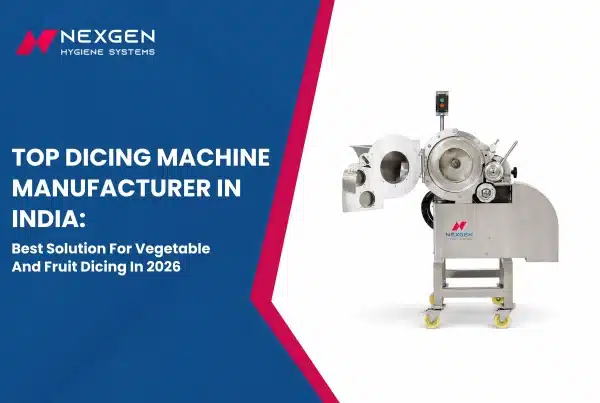
- Vegetable Dicing Machine — uniform cubes for soups, curries, frozen packs, and ready-to-cook products
- Slicing Machine — for onions, potatoes, cucumbers, beetroot, and banana chips; adjustable slice thickness
- Shredding Machine — for cabbage, carrot, and leafy greens used in salads, coleslaw, and stir-fry mixes
- Leafy Vegetable Cutting Machine — adjustable settings for spinach, methi, coriander, and other greens; gentle processing preserves texture
- Chopping Machine (GPST-600) — high-capacity chopping and grinding for ginger, garlic, onion, chilies, and masala preparation; suited for gravy bases, spice blends, and seasoning production
Who needs this: Any startup making ready-to-eat, ready-to-cook, frozen vegetables, snacks, spices, or packaged foods. This stage has the biggest impact on your product’s consistency and your maximum production capacity.
4. Drying Equipment
Moisture shortens shelf life, damages packaging, and affects product consistency. Still, many startup food factories do not invest enough in drying equipment until they face rejected batches or packaging problems.
What Nexgen supplies:
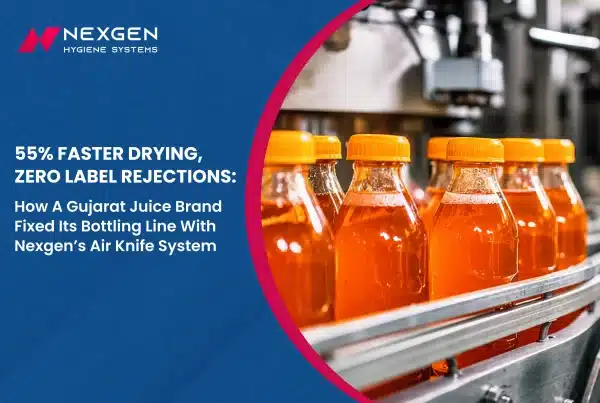
- Air Knife Drying System — high-velocity air removes surface moisture from washed produce, bottles, pouches, and vials after washing and before labeling or sealing. Eliminates adhesion failure, mould under labels, and moisture-related packaging rejection
- Tray Dryer — batch drying using hot air circulation; suited for spices, cut vegetables, herbs, dehydrated products, and snacks where moisture content in the finished product is a specification requirement
For startups making snacks, spices, dehydrated foods, or any product in sealed packaging, adding a drying system from the start is essential. It can mean the difference between batches that pass inspection and those that get rejected.
Who needs this: Snack manufacturers, spice processors, dehydrated food producers, any facility that washes product and then seals it in packaging.
5. Pulping and Extraction Equipment
For startups making fruit-based products like pulp, juice, jams, sauces, or beverages, extraction and pulping equipment is a must-have from the beginning. Manual extraction is slow, less hygienic, and leads to uneven yields, making it hard to standardize your product as you grow.
What Nexgen supplies:
- Custard Apple Pulper — separates pulp from seeds and skin efficiently; significantly reduces labor cost and processing time compared to manual extraction, while improving pulp yield and hygiene.
- Fruit Pulping Machine — for mango, guava, tomato, and similar fruits; separates usable pulp from waste material at throughput rates that manual processes cannot match.
Who needs this: Startups in fruit processing, beverage manufacturing, jam and sauce production, and any operation where fruit pulp is a primary raw material or finished product.
6. Hygiene Stations and Personnel Hygiene Equipment
Startup food factory owners often underbudget for this category, but it is also the one that leads to the most audit problems. Every food production area needs a formal, documented hygiene protocol for entry. If your protocol is informal or not enforced, you will fail FSSAI inspections, BRC audits, and retail buyer visits.
What Nexgen supplies:
- All-in-One Hygiene Station — sensor-operated unit combining hand wash, hand sanitizer dispensing, and sole cleaning in a single enforced sequence. HMI controls cycle duration; workers cannot skip steps or enter the line until the sequence completes
- Sole Cleaning Machine — rotating brushes with disinfectant solution clean the undersoles of footwear before production entry; essential in any GMP food environment
- Gumboot Cleaning Machine — for wet-process areas, including seafood, dairy, and pickle plants, where full boot cleaning is required
- Ecoline Hygiene Station — compact, sensor-activated unit for secondary entry points and space-constrained zones
For startups aiming for BRC, SQF, or export buyer compliance, Nexgen’s hygiene stations are designed so that compliance is automatic. The equipment ensures proper hygiene, rather than relying on individual habits or manual records.
Who needs this: Every food production startup, without exception. FSSAI requires documented personnel hygiene at every production entry point.
7. Conveyor Systems
As your production line grows, moving products by hand between washing, peeling, cutting, and packaging causes delays, increases contamination risk, and makes you rely too much on labor. Conveyors link your processing stages and keep products moving smoothly without manual work.
What Nexgen supplies:
- Belt Conveyor — general-purpose stainless steel food-grade conveyor for product transport between stages
- Inclined Conveyor — moves product up to a hopper or elevated machine input
- Inspection Conveyor — lit inspection belt for quality control post-cutting; adjustable speed with ergonomic lighting to reduce operator eye fatigue
Who needs this: Any startup operating more than two processing stages in sequence. The conveyor is what converts standalone machines into a production line.
8. Cashew Processing Equipment
For startups focused on cashew processing, which is a major export business in India, Nexgen offers a full range of specialized equipment.
What Nexgen supplies:
- Raw Cashew Sizer — grades incoming raw cashew by size for consistent downstream processing
- Cashew Kernel Dryer (Borma) — energy-saving units with compact design for high-production efficiency
- Cashew Shelling Machine — automatic dry-peel operation for efficient, labor-saving shelling with customizable settings for different cashew sizes
Who needs this: Cashew processing startups and export units in Kerala, Goa, Maharashtra, and Andhra Pradesh.
Equipment Priority by Factory Type
Not every startup needs all the machines right away. Here is a priority list matched to the most common types of startup food factories:
Ready-to-eat / Meal kit:
Priority 1 — Tilting vegetable washer, dicing machine, chopping machine
Priority 2 — Hygiene stations, conveyor integration, tray dryer
Priority 3 — Peeling machines for garlic and onion, leafy vegetable cutter
Snacks and namkeen:
Priority 1 — Slicing machine, tray dryer, hygiene stations
Priority 2 — Peeling machines, air knife drying system
Priority 3 — Conveyor systems, packaging line integration
Fruits and vegetables processing / export:
Priority 1 — Vegetable washer, peeling machine, dicing or pulping machine
Priority 2 — Air knife drying system, hygiene stations, inspection conveyor
Priority 3 — Cold storage integration, packaging line
Spices and masala:
Priority 1 — Chopping machine (GPST-600), tray dryer, peeling machines
Priority 2 — Hygiene stations, conveyor systems
Priority 3 — Grinding and blending equipment, packaging line
Cashew processing:
Priority 1 — Raw cashew sizer, shelling machine, kernel dryer
Priority 2 — Hygiene stations, inspection conveyor
Priority 3 — Packaging and grading line
What to Look for in Industrial Food Processing Machines in India
When choosing suppliers for industrial food processing machines in India, use these criteria to make sure your equipment performs well over five to ten years:
SS 304 or SS 316 construction throughout, not just on the outside panels. All surfaces that come into contact with food must be stainless steel. Use SS 316 in salty or acidic environments, such as pickles, seafood, or dairy.
GMP-compliant design: smooth, crevice-free surfaces with no bacterial blind spots. Open-frame construction for full cleaning access. Tool-free disassembly of all food-contact components.
Make sure all machines in your line have matching capacity. For example, if you have a 300 kg/hr cutter but only a 150 kg/hr washer, you will always have a bottleneck that manual work cannot solve.
Look for suppliers who offer turnkey solutions. The best suppliers will design, supply, install, and set up your entire line in one project. This approach avoids mismatches in capacity, hygiene gaps, and the hassle of dealing with multiple vendors.
Local after-sales support and spare parts: a machine idle for two weeks waiting for a spare part costs more in lost production than the machine itself. Choose suppliers with service infrastructure in India.
Final Thoughts
The manufacturers who succeed in 2026 aren’t the ones who spend the most. They’re the ones who plan carefully. The best food processing equipment for startups isn’t always the cheapest or the most advanced. It’s the equipment that fits your product, matches your production flow, meets compliance from day one, and grows with your business.
Start with machines that handle your core processing steps. Add hygiene infrastructure from the beginning, not as an afterthought. Choose a supplier who can design, supply, and set up your line as a complete system, not just a set of parts.
For over 20 years, Nexgen Machines has helped food manufacturers in India and more than 20 countries build compliant, efficient, and scalable production lines, from single machines to full turnkey setups.
If you’re planning your equipment list and want a line designed for your product, layout, and compliance needs, our team is ready to help.
FAQs
What is the most essential food processing equipment for a startup food factory?
For a startup, the most important food processing machines are a raw material washer, a peeling machine if needed, a cutting or dicing machine, a drying system, and a hygiene station at each production entry. These five cover the main processing steps and meet the basic FSSAI compliance required from the start.
How much does small-scale food processing equipment cost in India?
For a single-product startup in India, a basic small-scale food processing setup usually costs between ₹8 and ₹15 lakhs for the main machines. A more complete setup with hygiene stations, conveyors, and drying systems can cost ₹20 to ₹40 lakhs, depending on your needs. Government programs like PMFME and PLI offer capital subsidies of 35-50% on eligible equipment.
What should a food factory's equipment list include for FSSAI compliance?
To meet FSSAI rules, your equipment list should include SS 304 or 316 food-contact machines, a written entry hygiene protocol with hygiene stations, post-wash drying equipment, and food-grade cleaning tools. FSSAI inspectors look for proper hygiene setups, approved construction materials, and clear cleaning records.
Are automatic food processing machines worth the investment for a small factory?
Yes. Automatic food processing machines help you rely less on manual labor, keep output quality steady, and lower processing costs even for small factories. For example, one automated vegetable cutter can do the work of 8 to 10 people per shift and produce even cuts, which means less rework and fewer buyer complaints. Manual processing cannot guarantee these results.
How do I choose the right food manufacturing equipment suppliers in India?
When choosing food equipment suppliers, check five things: SS 304 or 316 construction with GMP-compliant design, local after-sales service and spare parts, proven installations in your industry, capacity to meet your peak production, and turnkey capability. Turnkey means the supplier can design, supply, install, and set up your entire line in a single project.
Insights and Updates