For years, most factories bought washers, cutters, and dryers from various suppliers at different times, with no unified system in place.
Now, factories are choosing integrated line design, combining washing, peeling, cutting, drying, and inspection into a coordinated system with matched capacities and connected conveyors.
This improves performance. For example, a 300 kg/hour cutter can’t perform well if the preceding washer handles only 150 kg/hour. Integrated lines avoid these mismatches.
When Modern food processing equipment is designed as a system, it increases output, reduces bottlenecks, and lowers the risk of contamination.
If you plan a new line or upgrade, ask suppliers not just what a machine does, but how it fits your process.
Integrated Line Design is Replacing Standalone Equipment
India’s food manufacturing industry is rapidly adopting new processing technologies, driven by higher hygiene standards set by retail buyers, tightening export compliance requirements, rising labor costs, and growing consumer expectations for consistent quality across every purchase.
These forces are prompting manufacturers to rethink their production lines. In this article, we explain the most significant industry changes in 2026 and their implications for manufacturers of all sizes.
In this article, we look at food processing technology trends in 2026 and what they mean for manufacturers of all sizes.
Hygiene Engineering is Now Built Into the Machine
A major food processing technology trend in 2026 is treating hygiene as a part of the equipment’s design. Older machines focused on output first, with cleaning and hygiene as afterthoughts. This caused equipment with hard-to-clean joints, hidden spaces, and difficult-to-clean drive units.
Modern food processing systems are designed for easy cleaning. They use SS 304/316 materials, open-frame designs with no hidden spaces, tool-free disassembly for food-contact parts, sloped drains, and sealed drives that withstand washdowns.
This saves cleaning time, eases documentation, and reduces contamination risks between batches.
For facilities seeking FSSAI Central License, BRC certification, or export compliance, hygienic equipment design is now a basic requirement.
HMI Controls Are Standardizing Compliance at the Entry Point
Hygiene at the start of production is often cited in audits, since relying on people introduces variability. Workers in a rush may skip steps, leaving no audit record.
HMI-controlled hygiene stations solve this. The system times each step, washing, sanitizing, and sole cleaning, and won’t advance unless each is completed. The HMI logs every cycle, automatically creating timestamped records for each shift.
This is one of the most important food processing innovations available to manufacturers today. It is not complex technology, but it turns a common compliance gap into a documented, auditable process almost immediately.
For manufacturers supplying modern retail chains or exporting to international markets, traceable hygiene records are now required.
Automation is Reaching the Peeling and Cutting Stages
Automation for washing and drying has been in use for years. In 2026, automation is reliable and more affordable for peeling, trimming, and cutting tasks previously the most labor-intensive.
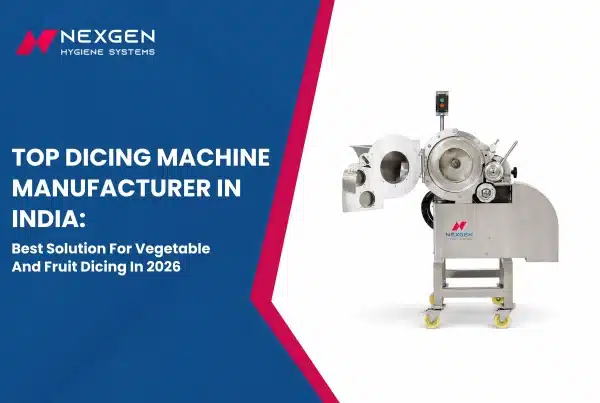
Now, continuous-feed garlic/onion peelers, inline cutters, multifunction dicers, and trim conveyors are available for mid-sized and small manufacturers.
For example, a 50 kg/hour garlic peeler replaces 6–8 manual workers, delivering uniform output with less damage. Vegetable dicer deliveries that produce consistent cubes reduce rework and buyer complaints.
For food processing machinery suppliers, the trend in 2026 is clear. Buyers now want automation at these stages from the start, not as a later upgrade.
Drying is Being Integrated Earlier in the Line
In the past, post-wash drying was often an afterthought. A dryer might be placed at the end of the line or left out if space or budget were limited. In 2026, this is changing as manufacturers realize the real costs of poor drying.
Residual moisture on the product before sealing causes mould, label adhesion failure, and shelf-life complaints. Residual moisture on bottles, pouches, or vials going through labeling causes adhesion failure and packaging rework.
In both cases, the cost of the rejects and rework far exceeds the cost of an integrated drying solution.
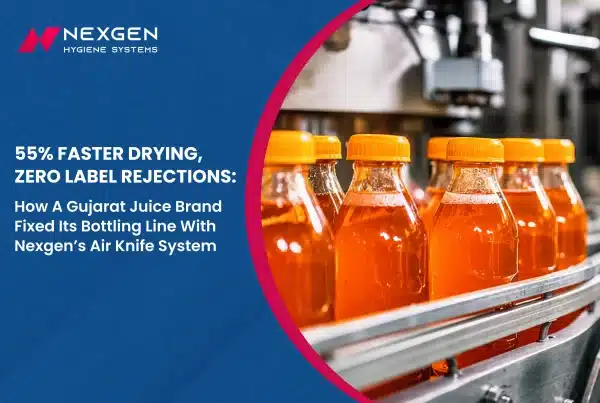
Food processing technology trends in 2026 are moving toward including drying in the line from the beginning. Air knife drying systems are placed after washing to remove surface moisture, and tray dryers are built into the cutting-to-packaging process for batch products.
Food processing machinery manufacturers in India who offer drying as part of a complete line solution are better positioned to deliver lines that perform consistently.
Turnkey Suppliers Are Replacing Multi-Vendor Line Builds
When a production line is sourced from five different suppliers, each handling one machine, and none is responsible for how they connect, it leads to coordination problems, mismatched capacities, inconsistent hygiene, and no single point of accountability if issues arise.
The trend in 2026 is toward turnkey suppliers: food processing machine manufacturers who design, supply, install, commission, and train on the complete line as a single engagement. The manufacturer gets one point of contact, one design responsibility, and a line engineered to work as a system rather than assembled from parts.
This is especially important for food processing machinery manufacturers in India, where turnkey capability increasingly distinguishes suppliers.
Why This Matters for Manufacturers Right Now
The food processing innovations in 2026 are practical upgrades that determine who wins contracts, passes audits, and grows profitably versus those who must later rebuild lines.
Manufacturers who act early on integrated line design, hygienic equipment, and HMI-controlled compliance will be ready for the next round of buyer requirements. Those who wait will have to make changes under pressure.
If you’re planning a new line, expanding, or preparing for an audit, your setup may not pass. Now is the time to start on a transformation strategy.
Talk to Nexgen Hygiene Systems about your production line requirements
FAQs
What are the biggest food processing technology trends in 2026?
The biggest food processing technology trends in 2026 include integrated processing lines, hygienic machine design, HMI-controlled hygiene systems, automation in peeling and cutting, advanced drying systems, and turnkey production line solutions. These technologies help manufacturers improve compliance, reduce labor dependency, and increase production efficiency.
Why is integrated line design important in food processing?
Integrated line design ensures all machines work together with matched capacities and synchronized flow. This reduces bottlenecks, improves hygiene control, minimizes contamination risks, and increases overall production efficiency compared to standalone equipment setups.
How does automation improve food processing operations?
Automation improves consistency, reduces manual labor requirements, minimizes product damage, and increases production speed. Technologies such as automatic peelers, inline cutters, and conveyor-based systems help manufacturers maintain uniform product quality while lowering operational costs.
What role do HMI-controlled hygiene stations play in compliance?
HMI-controlled hygiene stations create standardized hygiene processes by ensuring workers complete every sanitization step before entering production areas. These systems automatically generate timestamped records, helping manufacturers meet FSSAI, BRC, export, and retail audit requirements.
Why are turnkey food processing solutions becoming popular in India?
Turnkey solutions provide manufacturers with a single supplier responsible for design, installation, commissioning, and training of the complete production line. This reduces coordination issues, ensures equipment compatibility, improves accountability, and helps factories achieve faster project execution with better long-term performance.
Insights and Updates