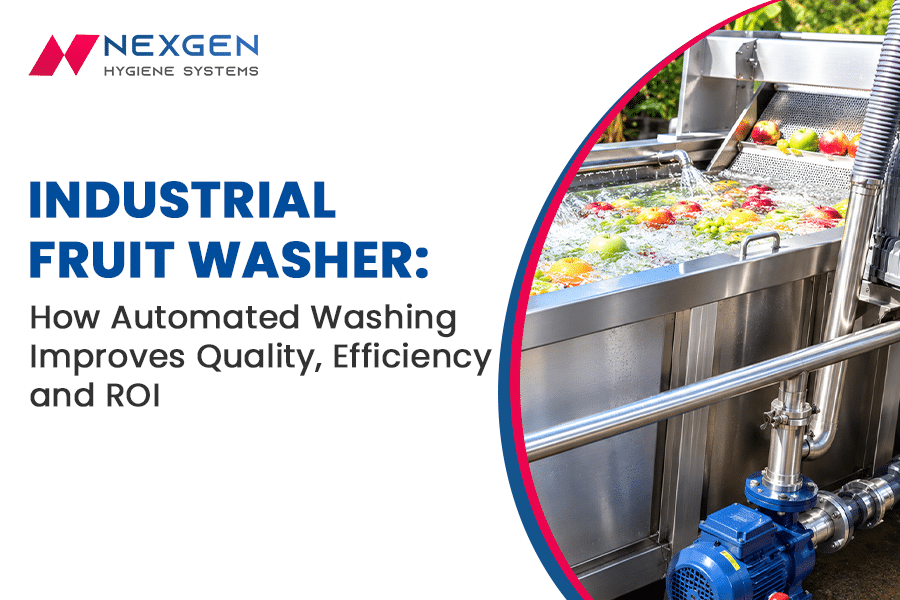
It’s easy to overlook fruit washing when reviewing a food processing line, but the task takes on new importance when you need to wash hundreds or thousands of kilograms each day.
As volume increases, so do the demands for labor, handling, and water, along with the need to keep washing consistent. If washing falls behind, it can slow down every step that comes after, like cutting, pulping, extraction, freezing, or packaging.
An industrial fruit washer gives processors more control over washing. Its benefits go beyond just replacing manual work. A well-integrated system can make washing more consistent, cut down on repetitive handling, boost throughput, and help production run more smoothly.
When Fruit Washing Starts Affecting Production
Manual washing is often fine for small operations, but as production grows, it becomes harder to manage.
Workers might wash different batch sizes or spend varying amounts of time on each batch. During busy times, the team often has to speed up just to keep up with the incoming fruit.
That can create several operational problems:
- Washing takes longer than downstream processing can accommodate.
- Labor requirements increase with production volume.
- Cleaning results can vary between batches or shifts.
- Additional handling increases the chance of avoidable product damage.
- Water consumption becomes harder to monitor and control.
- Fruit begins to accumulate between receiving and the next processing stage.
These problems rarely show up as one big cost. Instead, they appear as lost production time, extra labour, inconsistent handling, and unused capacity in later stages.
For a growing food processor, washing becomes a production issue, not just a cleaning step.
How Washing Influences Fruit Quality and Food Safety
Commercial fruit cleaning is intended to remove soil, field debris, and other surface contaminants before produce moves further into processing.
Consistency is important because washing is part of the plant’s overall hygiene and quality control. When the process relies mostly on manual work, there can be more variation between batches, especially if production volumes change.
An automated system helps keep washing conditions consistent and controlled, while also cutting down on unnecessary manual transfers.
However, washing equipment alone does not guarantee food safety. Water quality, how raw materials are handled, sanitation, equipment cleanliness, employee practices, and later processing steps all play a role in the final result.
The washing system’s main job is to make washing controlled, repeatable, and a good fit for the production process.
This is especially important for processors working with fruit for juice, pulp, frozen products, ready-to-process ingredients, and other commercial uses.
What Changes When Fruit Washing Is Automated?
Manual washing is often fine for small operations, but as production grows, it becomes harder to manage.
The difference becomes more significant at higher volumes. A review of agricultural produce washing research describes manual washing as tedious, labor-intensive, and time-consuming, with very low output, and notes that it is not suitable for medium- and large-scale processing.
Workers might wash different batch sizes or spend varying amounts of time on each batch. During busy times, the team often has to speed up just to keep up with the incoming fruit.
Automation changes the way fruit moves through the plant.
Instead of relying on workers to wash, handle, and move produce over and over, an automatic fruit washer keeps the flow through the washing stage more consistent.
A simplified processing sequence might look like: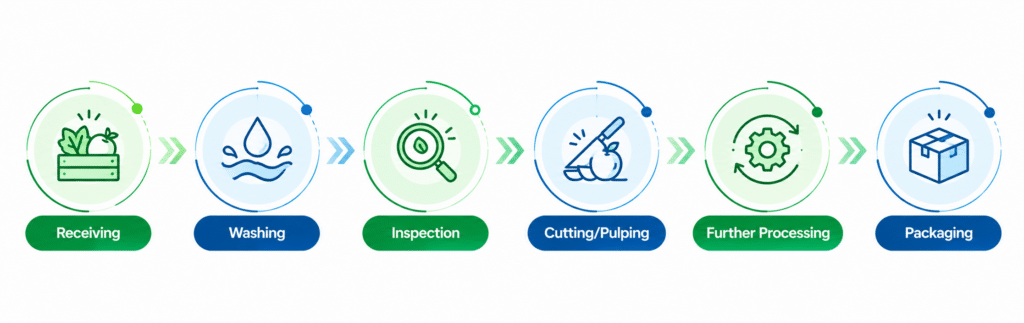
The washing stage has to keep pace with the next steps in the process.
If washing is slower than the next stage, fruit can pile up between steps. If the output changes a lot, the next machine might not get a steady supply.
That’s why it’s important to see an automatic fruit washer as part of the whole production flow, not just a replacement for manual work.
The aim is to make produce move through the plant in a more predictable way.
Is Your Washing Process Keeping Up?
When fruit volumes increase, the washing stage can quietly become a bottleneck. A closer look at your current cycle time, labor, and throughput can reveal where automation could make a difference.
Washing Needs to Match the Produce
No single washing method works for every type of fruit.
Firm fruits can handle different treatment than delicate ones. Fruit with a lot of soil or debris may also need a different washing method than cleaner produce.
This is why the setup of a produce-specific washing machine is important.
The system may use controlled water flow, agitation, spraying, or a mix of these methods, depending on the job. The goal is to clean the fruit well without causing unnecessary stress or damage.
If you process different products, flexibility in your washing system is also important.
The equipment should fit the type of fruit you process, its condition when it arrives, the needed throughput, and how it moves to the next stage.
Where Does the ROI Come From?
The business case for automated washing usually isn’t about just one type of saving.
It comes from the combined impact of several improvements in how the plant runs.
-
Lower dependence on repetitive labor
Automating repetitive washing and handling can cut down the manual work needed for each production run.
The real savings depend on your current workforce, shift patterns, production volume, and how much you automate.
-
Better use of processing capacity
A bottleneck in washing can stop downstream equipment from running at full capacity.
Making washing more consistent and faster helps keep a steady supply of fruit for the next processing steps.
-
More controlled water use
Manual washing can make it hard to track water use. A controlled washing system makes it easier to measure and manage water consumption.
The financial impact depends on your current water use, local water costs, and the system you choose.
-
Less unnecessary handling
Each time fruit is moved by hand, there’s a chance it could be dropped, bruised, or mishandled.
Cutting down on unnecessary movement helps keep product handling more consistent, especially if the equipment is designed for the type of produce you have.
-
Greater capacity during peak periods
Seasonal processors often face significant increases in incoming fruit.
Automation lets a plant handle more fruit without needing to hire as many temporary workers. This is especially helpful when there’s only a short processing window.
You should calculate ROI using your own production and operating data, not just a generic payback number.
A Real Example: 50% Higher Efficiency With Nexgen’s Industrial Fruit Washer
A real production environment shows how the washing stage can affect the whole operation.
Nexgen’s published case study features a food processing and agricultural produce export company processing 100 tonnes of fresh fruit every day. The project reported a 50% efficiency improvement after implementing Nexgen’s industrial fruit washing solution.
At this scale, washing is tightly linked to the rest of the process. Making this stage more efficient helps the plant handle large volumes and keeps the flow into later steps more consistent.
This result is a helpful reference, but it’s not a one-size-fits-all number. Actual improvements depend on your starting process, fruit type, production volume, labour setup, and equipment.
When Should You Consider Automated Fruit Washing?
There’s no single production volume where every processor needs automation.
The decision is easier when your current washing process starts causing clear problems.
It may be time to evaluate automation when:
- Washing has become a bottleneck.
- Labor requirements rise whenever production increases.
- Washing consistency varies between shifts.
- Water consumption is difficult to control.
- Manual handling is contributing to avoidable product loss.
- Seasonal peaks require significant temporary labor.
- Washing cannot keep pace with downstream equipment.
- The plant is planning a substantial increase in production capacity.
These are good signs to watch for because they link the investment to real operational issues.
Commercial Fruit Cleaning Should Fit the Whole Processing Flow
Commercial fruit cleaning is most effective when the washing stage is planned as part of the whole production line.
Take a plant that processes fruit into pulp. The fruit goes from receiving to washing, inspection, cutting, pulping, and then more processing. If washing can’t keep up, delays can affect every step that follows.
The same idea applies to plants making juice, frozen fruit, prepared ingredients, or other processed products.
That’s why you shouldn’t look at equipment capacity on its own.
The key question is whether the washing system matches your plant’s production volume, product mix, operating hours, and downstream capacity. A detailed guide on industrial fruit washing equipment can help you make a better-informed decision.
What Should You Measure Before Automating?
Before you compare fruit washing equipment, set a baseline for your current process.
| Metric | What to measure |
| Daily production | Total fruit washed each day |
| Peak production | Highest expected daily or seasonal volume |
| Labour | People involved in washing per shift |
| Washing time | Time required for each batch |
| Water consumption | Approximate water used per batch or day |
| Product loss | Damage, rejection, or avoidable handling losses |
| Bottlenecks | Delays created before or after washing |
| Downstream capacity | Processing capacity available after washing |
| Floor space | Area currently used by the washing operation |
These numbers give you a practical starting point for evaluating an automatic fruit washer.
They also show where your investment should add value. For some plants, labour is the main issue. For others, it might be throughput or water use.
Conclusion: Look at the Washing Stage as Part of the Plant
An industrial fruit washer does more than just replace manual cleaning.
When it’s matched to your produce and production setup, it can make washing more consistent, cut down on repetitive handling, improve production flow, and help you handle higher volumes with better control.
The best business case comes from knowing what your current process really costs in labour, time, water, handling, and lost capacity.
This gives food processors a clearer way to decide if automation will deliver a good return.
Looking to Improve Your Fruit Washing Efficiency?
A better washing process can reduce manual effort, improve production flow, and help you handle higher fruit volumes more consistently.
FAQs
What problems can an industrial fruit washer solve?
An industrial fruit washer can help address inconsistent washing, repetitive manual labour, processing bottlenecks, excessive handling, and challenges associated with increasing fruit volumes. The actual benefits depend on the produce, production volume, existing washing process, and equipment configuration.
Can an automatic fruit washer reduce labor requirements?
An automatic fruit washer can reduce the amount of repetitive labor required for washing and handling. The actual reduction depends on the existing process, production volume, shift pattern, machine capacity, and degree of automation.
Can a produce washing machine handle different types of fruit?
A suitably configured produce washing machine can be designed to handle different produce types, but the appropriate washing conditions depend on factors such as fruit size, surface characteristics, condition, and handling sensitivity. Equipment should therefore be matched to the actual product mix.
When should a food processing plant automate fruit washing?
A plant should evaluate automated washing when the existing process has become a bottleneck, labor requirements are increasing, washing results vary, water use is difficult to control, or planned production growth exceeds current washing capacity.
Insights and Updates