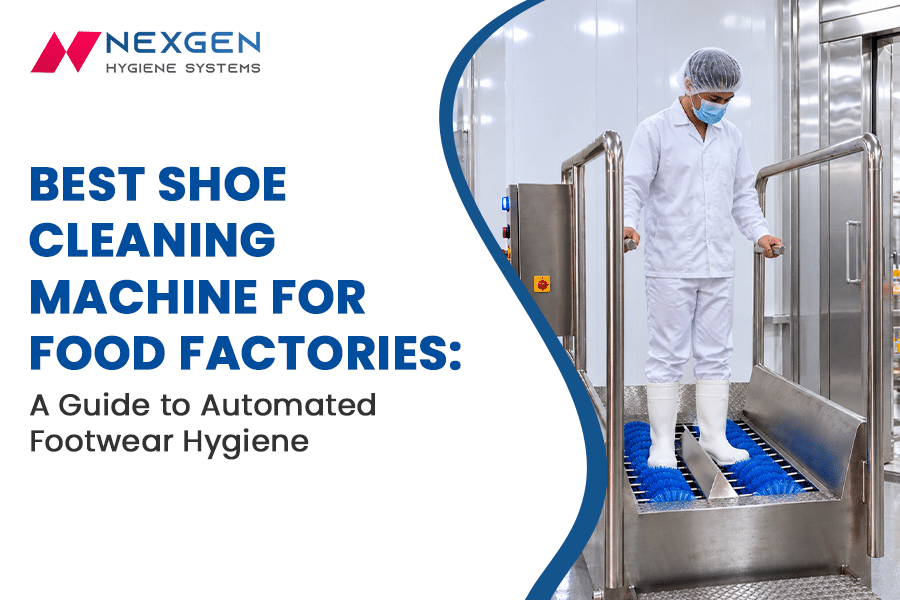
Even if workers follow all hygiene steps, they can still bring contaminants into production on their shoes.
During a shift, workers in a food factory move through changing rooms, corridors, wet-processing areas, raw-material zones, and production floors. Their shoes go everywhere they do.
Manual cleaning is fine for small operations. But as more workers and entry points are added, it gets harder to keep the process consistent on every shift.
A shoe cleaning machine turns footwear cleaning into a set part of entering production. Automated brushes, water, and disinfectant take over from manual cleaning and run on a set cycle.
The right equipment depends on your plant. If workers wear low-profile safety shoes, your needs are different from a seafood or dairy plant where everyone wears tall gumboots.
This guide covers what to look for in an automatic shoe cleaner, the types of footwear cleaning equipment available, and when to choose a sole cleaner, boot washer, or integrated hygiene station.
What Does a Food Factory Actually Need to Clean?
Start by looking at the footwear and the conditions it faces.
For workers wearing safety shoes in a relatively dry production area, the sole may be the main surface requiring attention. In wet-processing environments, gumboots can collect material along their sides and underneath.
The type of residue is important too. Light dust and dirt need a different cleaning approach than wet food residues or heavier organic material.
Consider these requirements:
- Shoe soles where the underside is the primary concern
- Boot soles and sides where footwear encounters wet or sticky residues
- Full gumboots used in wet-processing areas
- Light dirt and dust in dry production environments
- Heavier organic residue in applications such as seafood, meat and dairy processing
A personnel shoe washer designed only for soles may not suit a plant where employees wear tall gumboots.
In the same way, a gumbchoot cleaning machine needs to cover more area than a basic sole cleaner.
The Three Main Types of Footwear Cleaning Systems
Sole Cleaning Machine
A sole cleaning machine focuses on the underside of footwear.
Rotating brushes work against the sole while water and, where required, disinfectant are applied during the cycle. Sensor-operated models can activate when a worker enters.
This setup works well at entry points where employees mostly wear safety shoes or low-profile footwear.
Nexgen offers a Sensor Operated Sole Cleaning Machine as a dedicated solution. Sole cleaning can also be incorporated into its broader hygiene station configurations.
Boot/Gumboot Cleaning Machine
A boot or gumboot cleaning machine provides wider coverage for taller footwear.
Depending on the design, the brushes can clean both the sole and sides of the boot. This makes the system better for wet-processing areas where gumboots collect material on more surfaces.
Typical applications include:
- Seafood processing
- Meat processing
- Dairy processing
- Wet food production
How the brushes are arranged matters here. A sole-only cleaner cannot reach the sides of boots like equipment made for gumboots can.
Nexgen offers a Gumboot Cleaning Machine with All-in-One Hygiene Station for such applications.
Integrated Hygiene Station
Footwear cleaning can also be included in a larger hygiene checkpoint for staff.
A typical sequence may combine:
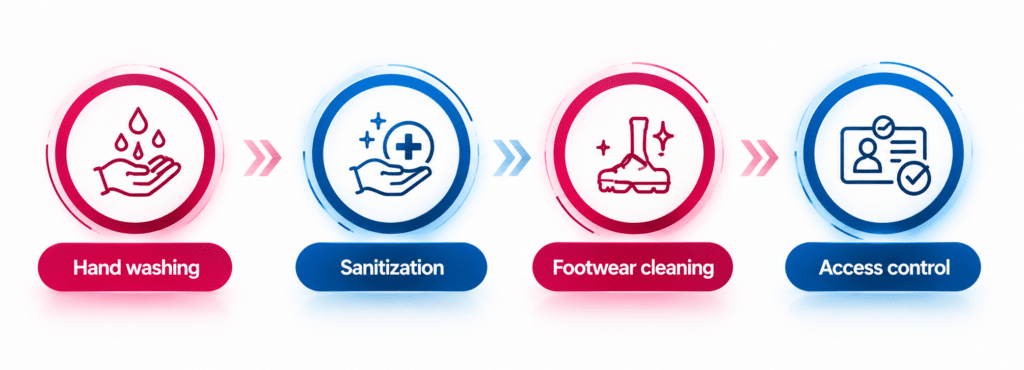
Instead of having workers do several separate steps, the station combines them at one controlled spot.
Nexgen’s hygiene station range includes all-in-one and sole-cleaning configurations, with HMI-controlled cycles and access-control options.
This setup is especially helpful when footwear cleaning needs to happen with other entry steps.
What Makes a Good Automatic Shoe Cleaner?
Once you know what needs cleaning, compare machines based on how well they do that job.
Cleaning coverage
Determine whether the machine cleans:
- Sole only
- Sole and sides
- Full boot
The cleaning coverage should match the type of footwear used in each production area.
Brush configuration
Where the brushes are placed decides which parts of the footwear get cleaned.
Sole cleaners use brushes positioned for the underside. Boot cleaning systems add brushes for the sides or shafts.
Automatic activation
Sensors can start the cleaning cycle as the worker enters.
This means workers do not have to use controls by hand, making it easier to keep the process consistent at the checkpoint.
Water and chemical dosing
Check how the system supplies and controls water and cleaning or disinfecting chemicals.
Controlled dosing gives a more reliable process than letting each worker apply chemicals on their own.
Cleaning and maintenance
The machine should be easy to clean after use.
Ask:
- Can brushes be removed easily?
- Can the basin be cleaned thoroughly?
- How is wastewater drained?
- How often do brushes need replacement?
- Can operators reach pumps and dosing components?
These details directly affect daily operation.
Throughput
Assess capacity against peak personnel movement, particularly during shift changes.
A machine that works for a small team might cause lines if many employees arrive at once.
How Many Workers Will Use It?
The number of people using the machine should guide your setup choice.
A small facility with staggered entry times does not need as much capacity as a large plant where many employees enter at once.
| Factory situation | More suitable approach |
| Small workforce, low traffic | Compact sole cleaner |
| Medium workforce | Automatic sole/boot cleaner |
| Wet processing environment | Gumboot cleaning machine |
| High worker traffic | Walk-through system |
| High-risk entry zone | Integrated hygiene station + access control |
| Multiple hygiene steps | All-in-one hygiene station |
In busy facilities, look at the whole entry setup, not just the cleaning cycle time. The number of users, hygiene steps, and entry lanes all affect how quickly people get through.
Where Should the Shoe Cleaning Machine Be Installed?
It might seem best to put the machine at the production entrance, but it should go where people move from one hygiene zone to another.
Depending on the plant layout, this could be:
- Changing room → production
- Raw → processed area
- High-care entry
- Wet → dry zone
- Packaging area entry
- Controlled routes between production areas
For example, if the machine is set up several meters from the hygiene boundary, workers might skip the process after cleaning.
Thinking about hygiene zones helps you find the best spot for the machine. You can then check each transition to see what level of cleaning is needed.
Manual Shoe Cleaning vs Automated Footwear Hygiene
Manual cleaning relies on each worker following the procedure the same way every time.
Workers have to use the brushes properly, spend enough time cleaning, and follow the right steps. During busy shift changes, it is harder to supervise everyone.
An automated system sets a clear cleaning cycle.
| Manual cleaning | Automated cleaning |
| Depends on operator execution | Uses a defined cleaning cycle |
| Results can vary | Creates a more consistent process |
| Requires supervision | Reduces routine manual supervision |
| Can slow entry | Can be designed around worker flow |
| Harder to standardise | Easier to standardise |
| Separate cleaning steps | Can integrate with hygiene controls |
Automation does not guarantee everyone will comply, but it gives you more control over the cleaning process and can link it to other hygiene steps.
The Nexgen Example: From Gumboot Cleaning to Controlled Entry
At a seafood and frozen-food processing operation, footwear hygiene was part of a wider entry-control challenge.
Manual boot cleaning and scattered hygiene checkpoints made it hard to keep the process consistent. Hand hygiene was managed separately too.
Nexgen installed a Gumboot Cleaning Machine with an All-in-One Hygiene Station.
The system combined gumboot sole and side cleaning with touch-free hand hygiene and access control. Rotating brushes and sensor-triggered jets cleaned and disinfected the gumboots, completing the cycle in about 12 seconds.
After implementation, the facility reported:
- 99.3% hygiene compliance
- Average entry time reduced from 3.7 minutes to 1.9 minutes
- Hygiene supervision reduced from 4 staff members to 1
- Contamination events reduced to fewer than one per month
The impact was more than just the cleaning machine. Footwear cleaning became part of a controlled entry process, along with hand hygiene and access control.
Not Sure Whether You Need Sole Cleaning or Full Boot Washing?
The type of footwear, number of workers, traffic flow, and hygiene zones all influence the best setup for your plant.
What to Check Before Buying Footwear Cleaning Equipment
Before you ask for quotes, make sure the supplier understands your operating conditions clearly.
Ask:
- What footwear types can the machine clean?
- Does it clean soles, sides or both?
- What is the cleaning cycle time?
- How many workers can use it per minute?
- How does chemical dosing work?
- How is wastewater drained?
- How easily can brushes be removed?
- Which parts require routine replacement?
- What stainless-steel grade is used?
- Can it integrate with hand hygiene?
- Can it connect to access control?
- How does it perform during peak shift changes?
- What installation space is required?
These questions help procurement teams compare machines based on real operating needs, not just on the number of features.
They also help you decide if a standalone footwear cleaning machine is enough or if you need a full hygiene station.
Shoe Cleaning Machine vs Gumboot Cleaner: Which One Do You Need?
| Requirement | Suitable system |
| Shoe soles only | Sole cleaning machine |
| Safety shoes + low boots | Shoe/sole cleaning machine |
| Full-height gumboots | Gumboot cleaning machine |
| Sole + boot sides | Boot washer with side brushes |
| High-traffic production entry | Walk-through boot washer |
| Footwear + hand hygiene | Integrated hygiene station |
| Hygiene + controlled access | Hygiene station with access control |
The same factory might need different setups at different entry points.
A general production entrance could use a sole cleaner, but a wet-processing entry might need a system that cleans both the soles and sides of gumboots.
What “Best” Means for a Food Factory
The best shoe cleaning machine is the one that matches the footwear, cleaning needs, number of people, and hygiene process at each entry point.
This means you should avoid making things too complicated or not providing enough cleaning coverage.
A full boot washer might be too much for a dry production entrance where workers wear safety shoes. A small sole cleaner might not be enough for a wet-processing area where employees wear gumboots.
Capacity should match the number of people entering during shift changes, not just the daily average.
If footwear cleaning, hand hygiene, and access control are all part of your entry process, an integrated station can combine these steps.
The right system should fit your plant’s workflow and make it easier to keep hygiene steps consistent.
Need a Footwear Hygiene System Built Around Your Plant?
Tell Nexgen what your workers wear, how many people enter during peak shifts and where your hygiene checkpoints are located.
What is a shoe cleaning machine used for in food factories?
A shoe cleaning machine cleans workers’ footwear before they enter production areas. Depending on its configuration, it can clean soles, boot sides or both using brushes, water and cleaning or disinfecting solutions. Food factories use these systems as part of personnel hygiene checkpoints between different production or hygiene zones.
What is the difference between a shoe cleaner and a boot cleaning machine?
A shoe cleaner generally focuses on the soles of safety shoes or low-profile footwear. A boot cleaning machine provides broader coverage and can clean the soles and sides of taller footwear such as gumboots. The appropriate system depends on the footwear used and conditions within the production area.
How does an automatic shoe cleaner work?
An automatic shoe cleaner typically uses sensors to activate a preset cleaning cycle when a worker enters. Rotating brushes clean the footwear while water and, where required, cleaning or disinfecting solutions are applied. The defined cycle helps standardize cleaning without requiring workers to manually operate the machine.
How do I choose footwear cleaning equipment for a food factory?
Start with the footwear types used in production, the surfaces that need cleaning and the number of workers entering during peak periods. Then assess cleaning coverage, cycle time, brush configuration, dosing, drainage, maintenance and integration with hand hygiene or access control. This helps match the equipment to the facility’s operating conditions.
Insights and Updates