
Market access is expanding. And, it’s an opportunity for Indian Food Processing and Packaging businesses to gain access to the European market, approach their retail chains, and maybe even establish a plant in EU nations.
But here’s the reality check: accessing Europe isn’t just about competitive pricing.
It’s about meeting some of the world’s most stringent food safety standards. As an Indian food processor, you’re already navigating FSSAI (Food Safety and Standards Authority of India) requirements for domestic operations.
That’s your baseline.
But European buyers don’t care about FSSAI alone. They want:
- BRC (British Retail Consortium) certification – the global standard for retail-ready food products
- EU food safety and hygiene compliance standards are requirements for products entering European markets
- Documented systems that prove your facility can consistently deliver safe, traceable products
In short, FSSAI serves as the foundational domestic standard, but BRC certification and EU-specific regulations build on top of it as separate layers. Each demands unique investments, documentation, and audits without sharing common elements.
Why This Matters Right Now
The India EU FTA reduces tariff barriers. But it doesn’t reduce hygiene expectations. In fact, it increases their importance.
As more Indian food producers compete for European contracts, those with proven compliance gain immediate advantage.
The window to differentiate through compliance is NOW, before your competitors catch up.
FSSAI: Domestic Compliance Foundation
FSSAI mandates a comprehensive food safety management system built on three core pillars:
1. PERSONNEL HYGIENE PROTOCOLS
FSSAI requires your facility to maintain strict personnel hygiene standards in European food factories. This includes:
- Medical fitness certificates for food handlers
- Regular hygiene training (refreshed annually)
- Mandatory illness reporting before entering production areas
- Hand washing and sanitization at defined checkpoints
- Protective clothing requirements (clean, appropriate to task)
The challenge most Indian processors face: These requirements sound straightforward, but enforcing them consistently at scale, especially during high-season production, creates operational friction.
Many facilities struggle with documentation and audit trail proof.
2. FOOD SAFETY MANAGEMENT SYSTEMS (FSMS)
FSSAI requires HACCP (Hazard Analysis and Critical Control Points) or FSMS implementation. You must:
- Identify potential contamination hazards in your specific process
- Define critical control points (CCPs) where you can prevent, eliminate, or reduce hazards
- Set and monitor limits at each CCP
- Implement corrective actions when limits are exceeded
- Maintain detailed records proving control
3. SANITATION AND FACILITY MANAGEMENT
Food plant sanitation requirements under FSSAI demand:
- Documented cleaning schedules for all areas and equipment
- Use of approved sanitizers with residue validation
- Pest control programs with regular monitoring
- Wastewater treatment and facility maintenance
- Allergen management and cross-contamination prevention
Why FSSAI Alone Isn’t Enough for European Export
FSSAI compliance demonstrates you meet Indian domestic standards. It’s necessary.
But European buyers view it as your baseline, not your differentiation.
Why? Because:
- FSSAI standards, while rigorous, are designed for the Indian market context
- European retailers source globally; they want a universal, internationally-recognized certification
- FSSAI compliance doesn’t automatically prove you can meet EU food plant hygiene standards specific to European regulations
- Many Indian facilities achieve FSSAI compliance but fail BRC audits due to gaps in documentation, traceability, and food safety culture
The real question: You’re FSSAI-compliant. But are you BRC-ready?
BRC Certification: The Export Gateway to European Retailers
If FSSAI is your domestic foundation, BRC (British Retail Consortium) certification is your passport to European retail channels.
Here’s what most Indian food exporters don’t realize: European retailers don’t directly audit your facility. Instead, they demand BRC certification, which is a third-party verification that your food safety systems meet global retail standards.
What BRC Actually Is (And Isn’t)
BRC is a global food safety standard developed by the British Retail Consortium. It’s recognized by European supermarkets, restaurants, food service companies, and distributors worldwide.
Key point: BRC isn’t a legal requirement from the EU government. But it’s a de facto requirement from European retailers. If Tesco, Carrefour, Leclerc, Lidl, or Sainsbury’s are your targets, they expect BRC certification.
What BRC covers:
- Food safety management systems (similar to FSSAI, but more granular)
- Traceability and recall procedures
- Supplier management and verification
- Product authenticity and GMO labeling
- Allergen management
- Pest control and facility hygiene
- Documentation and audit trail completeness
BRC vs. FSSAI: Key Differences
| Aspect | FSSAI | BRC |
|---|---|---|
| Jurisdiction | India (domestic focus) | Global (international standard) |
| Focus | Baseline food safety for India | Retail-ready food safety globally |
| Audit Type | Government agency audit | Third-party accredited auditor |
| Audit Frequency | Annual (routine) | Annual (required for maintenance) |
| Documentation Demands | Moderate | Extensive (audit trail critical) |
| Traceability Requirements | Mandatory but basic | Detailed (backward & forward) |
| Recognized By | Indian retailers and government | European retailers, food service, distributors |
The most critical difference: FSSAI compliance is operational; industrial hygiene compliance for food factories Europe demands obsessive documentation proving compliance at every step.
BRC Audit Process: What to Expect
Step 1: Select an Accredited BRC Auditor
BRC audits must be conducted by accredited certification bodies recognized by BRC Global Standards. You can’t do an internal audit and declare yourself BRC-certified.
Step 2: Pre-Audit Assessment (Optional But Recommended)
Many Indian facilities hire consultants to conduct a pre-audit gap assessment. This identifies gaps before the official audit and reduces failure risk. Cost: ₹50,000-₹2,00,000 depending on facility size.
Step 3: The Official BRC Audit
The auditor conducts a comprehensive 1-3 day assessment (depending on facility size) covering:
- Management system review (food safety policies, risk assessment)
- Site inspection (facility, equipment, cleanliness)
- Document verification (procedures, records, audit trails)
- Staff interviews (understanding of food safety procedures)
- Traceability mock recall exercise
Step 4: Audit Report and Corrective Actions
The auditor issues a report with:
- Major nonconformances: Critical gaps (must fix before certification)
- Minor nonconformances: Process improvements (must address, typically 3 months)
- Observations: Recommendations for best practice
You’ll typically have 2 weeks to submit corrective action plans, then 2-3 months to implement and prove resolution.
Step 5: Certification (or Re-audit)
If all major nonconformances are resolved, you receive BRC certification (valid 3 years). If significant issues remain, a re-audit is scheduled.
What BRC Certification Gets You
Once BRC-certified, you can:
Market directly to European retailers and food service companies
Meet buyer requirements without facility audits (they trust the BRC audit)
Command premium pricing based on certified safety standards
Expand into new markets (BRC is globally recognized)
Reduce buyer-initiated audits (saves time and operational disruption)
Common BRC Failures for Indian Processors
Most Indian facilities fail their first BRC audit due to:
- Documentation gaps: FSSAI compliance is operational; industrial hygiene compliance for food factories Europe demands obsessive documentation proving compliance at every step
- Traceability failures: Cannot track ingredients backward or products forward through the entire supply chain
- Personnel hygiene proof: No systematic documentation of hygiene training, illness reporting, or hygiene checkpoint passage
- Equipment sanitation records: Cleaning happens, but there’s no dated, signed proof of what was cleaned, how, and when
- Allergen management: Allergens are managed operationally, but documentation is incomplete or ambiguous
- Supplier verification: You use raw materials from suppliers, but haven’t formally verified their safety certifications
Critical Insight: BRC doesn’t demand you do more than FSSAI requires. It demands you prove what you’re doing through meticulous documentation. Many Indian facilities fail BRC not because their processes are unsafe, but because they can’t prove they’re safe.
EU Market Requirements: What You Actually Need to Know
Many Indian exporters assume the EU has a single, mandatory certification similar to FSSAI. It doesn’t.
Instead, EU regulations for food processing hygiene comprises binding regulations on food hygiene, safety, and traceability (e.g., Reg. 852/2004, Reg. 178/2002) that apply to all products entering European markets, regardless of origin. apply to all products entering European markets, regardless of origin.
These set the mandatory compliance floor, often verified through systems like HACCP and documentation.
It’s basically systems and documentation proving compliance. Let’s deep dive:
Core EU Regulations You Need to Know
1. EC REGULATION 852/2004 (FOOD HYGIENE REGULATION)
This is the foundational regulation defining EU food plant hygiene standards. It requires:
- HACCP-based food safety systems (same as FSSAI, actually)
- General hygiene requirements for food businesses
- Personnel hygiene standards in European food factories (hand washing, illness reporting, protective clothing)
- Temperature control and facility maintenance
- Traceability from farm to consumer
2. EC REGULATION 178/2002 (GENERAL FOOD LAW)
Establishes EU food safety and hygiene compliance framework, including:
- Food business operator responsibility (you own food safety)
- Traceability requirements (farm-to-table)
- Rapid alert systems for unsafe food
- Import requirements (your facility must meet EU standards)
3. PRODUCT-SPECIFIC REGULATIONS
Depending on your product (dairy, spices, ready-to-eat, etc.), additional regulations apply:
- EC 2073/2005: Microbiological criteria for food products
- EC 1169/2011: Food labeling and allergen declaration
- EC 396/2005: Pesticide residue limits
The Critical Difference: Regulations vs. Certifications
EU regulations are the legal baseline. Your facility must comply with them. But there’s no “EU Certification Body” that audits you for compliance (unlike FSSAI).
Instead:
- You implement systems proving compliance with EC 852/2004 and 178/2002
- You maintain documentation proving compliance
- EU authorities CAN audit your facility if issues arise (and they sometimes do for imports)
But most European buyers don’t conduct facility audits themselves. They rely on third-party certifications like BRC
How BRC Demonstrates EU Compliance
Here’s where it connects: BRC certification demonstrates that your facility meets EU food plant hygiene standards. The BRC audit specifically verifies EC 852/2004 and 178/2002 compliance.
So when you’re BRC-certified and exporting to Europe, you’re simultaneously proving:
- FSSAI compliance (your domestic baseline)
- BRC certification (international retail standard)
- EU regulations for food processing hygiene compliance (legal baseline for market entry)
The India-EU FTA Impact
The India-EU Free Trade Agreement reduces tariffs on food products starting 2026. But it explicitly states: Tariff reduction does not reduce hygiene standards or compliance expectations.
In fact, it increases the importance of compliance:
- Tariff reduction means more Indian competitors will enter European markets
- Retailers will have more choices, so compliance becomes your differentiator
- Non-compliant facilities will be filtered out quickly
- Early movers with BRC certification gain market advantage
A Gujarati Spice Processor’s Export Journey: A Case Study
Market Reality Check
Let’s walk through how this actually plays out for a real Indian food processor.
The Setup
- Company: Mid-size spice processing facility in Gujarat
- Current Status: FSSAI-certified, supplying Indian retail chains
- Goal: Export to European supermarket chains
- Target Buyer: Large European retailer interested in Indian spice blends
The Process
Month 1: FSSAI Compliance Check
The facility conducts internal audits against FSSAI standards. They’re compliant on paper. But auditor finds:
- HACCP documentation is outdated (created 3 years ago, not updated)
- Personnel hygiene training records are incomplete
- Cleaning logs are sporadic, not systematic
- Estimated time to strengthen: 3-4 weeks
Month 1-2: BRC Pre-Audit Gap Assessment
They hire a BRC consultant to assess their facility against industrial hygiene systems for EU food plants standards. The findings are sobering:
Major gaps: Traceability system is manual and incomplete; supplier verification lacks documentation; allergen management documentation is missing; pest control records are informal
Minor gaps: Personnel training records need standardization; cleaning procedures need detailed documentation; equipment maintenance logs need consistency
The consultant provides a 6-week corrective action roadmap.
Month 2-3: System Implementation
The facility implements improvements:
- Implement a traceability system (could be as simple as a well-documented spreadsheet, or advanced software)
- Create supplier verification documents confirming suppliers meet food safety standards
- Develop standardized personnel hygiene training records and attendance logs
- Document cleaning procedures and verification (dated, signed logs)
- Implement allergen management procedures with documentation
- Organize pest control records with dated evidence and corrective actions
Cost: ₹75,000 – ₹1,50,000 (software, training, consulting, documentation)
Month 3-4: BRC Audit
An accredited BRC auditor arrives for a 2-day assessment. They review:
Food safety policies and HACCP system (now comprehensive and current)
Facility conditions (clean, well-maintained, pest control evidence visible)
Documentation (comprehensive and organized)
Staff knowledge (trained and understanding procedures)
Traceability exercise: “This spice batch from 2 months ago, trace its ingredients backward and distribution forward” (facility completes within 30 minutes)
Result: 3 minor nonconformances (small documentation gaps), no major issues. Certification granted within 3 weeks.
Month 5: Export-Ready
Facility now holds:
- FSSAI certification (domestic credibility)
- BRC certification (international retail standard)
- Compliance with hygiene standards for European food manufacturing (market access)
They contact the European retailer: “We’re now BRC-certified. Here’s our certificate.”
The buyer is satisfied.
Contract discussions begin.
And, the first shipment happens within 6 weeks.
The Timeline & Cost
- Total time from “we want to export” to BRC-certified: 4-5 months
- Total investment: ₹2,00,000 – ₹4,00,000 (assessment, corrective actions, audit)
- Payoff: Access to the European retail market worth ₹50+ lakhs annually
Key lesson: The investment in BRC is small compared to the revenue opportunity. Facilities that delay certification lose market share to competitors who move faster.
Systems & Equipment that Enable Compliance
Here’s a critical realization many Indian exporters miss: You can be fully compliant with FSSAI and BRC standards, but still struggle during audits if your facility design and systems don’t visibly support compliance.
Auditors want to see a facility that makes compliance easy, obvious, and hard to avoid.
The Role of Hygienic Design
Hygienic design requirements for food machinery EU matter because clean equipment is easier to audit and proves you take hygiene seriously.
Key principles:
- Material: Stainless steel (non-porous, bacteria-resistant) vs. painted surfaces (can chip, harbor bacteria)
- Surfaces: Smooth, seamless, polished welding (no cracks or crevices where bacteria hide)
- Accessibility: Equipment must be cleanable. Removable parts, no hidden internal spaces
- Drainage: No standing water (breeds biofilms). All surfaces slope to drain
Personnel Hygiene Systems
This is where industrial hygiene systems for EU food plants become practically relevant for your facility.
Rather than relying on worker discipline and memory, implement systems:
1. HYGIENE CHECKPOINTS BEFORE SENSITIVE ZONES
Before workers enter production areas:
- Hand washing stations (mandatory passage)
- Sole cleaning stations (for boot/floor contamination)
- Sanitizer application point
- Medical check evidence (health certificate visible)
Why this matters for audits: Auditors see a facility that enforces hygiene through design, not just procedure. They see workers naturally passing through checkpoints. They see cleaned, organized stations. They see that you’ve thought about contamination prevention.
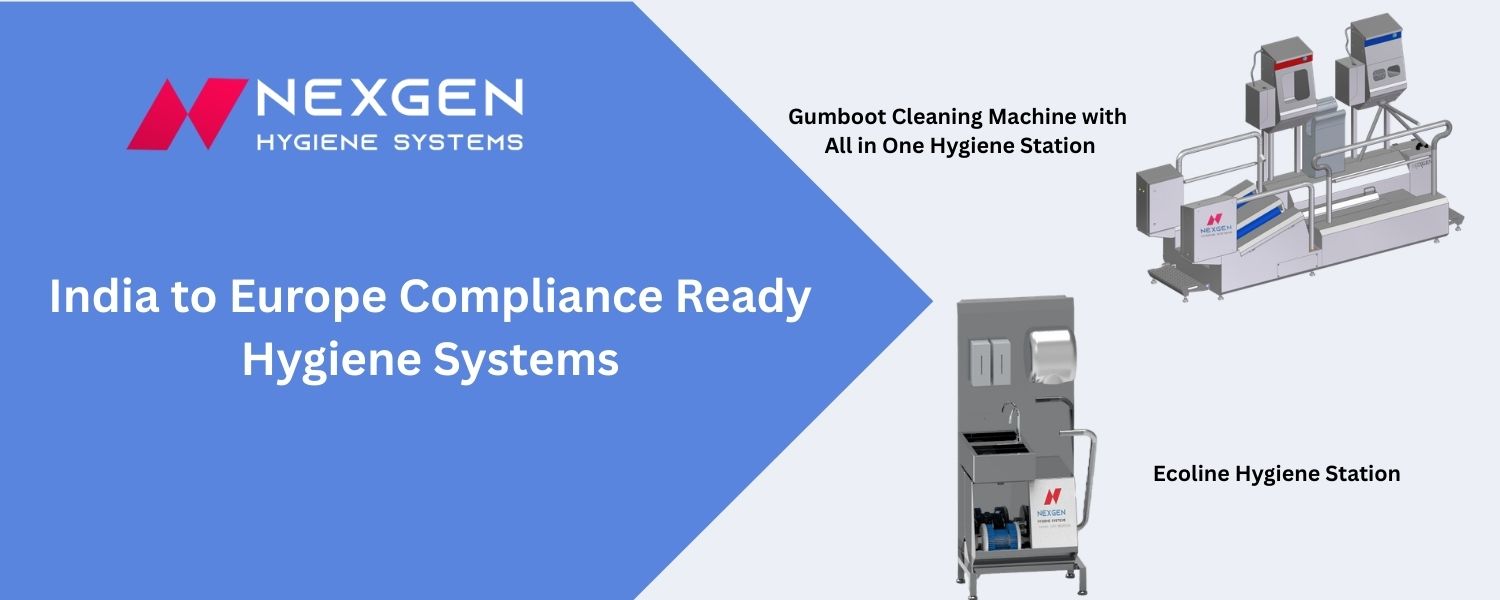
2. ALL-IN-ONE HYGIENE STATIONS
Industrial all-in-one hygiene systems for EU food plants sometimes include integrated hygiene stations that combine:
- Hand washing with soap and warm water
- Automated hand sanitizer dispensing
- Sole cleaning (boot scrubber or boot dip)
- Sensor-based operation (contact-free)
- Optional: Digital touchpad recording passage (audit trail)
Why this matters: One integrated station ensures everyone goes through all steps. No shortcuts. And if you include digital recording, you have audit proof: “On May 15th at 8:30 AM, 47 workers passed through a hygiene checkpoint before entering production. 45 completed all steps; 2 [names] missed hand sanitizer step, investigate.”
This level of documentation is what separates facilities that barely pass BRC from those that impress auditors.
3. DOCUMENTATION SYSTEMS
Beyond physical infrastructure, you need documentation systems:
- Training records: Signed attendance, date, topic, assessed understanding
- Illness reporting logs: System for workers to report illness; management records action taken
- Cleaning logs: Dated, signed records of what was cleaned, how, when, verified by supervisor
- Equipment maintenance: Records of inspections, repairs, validation
- Traceability records: Ingredient batch numbers, supplier info, production date, distribution records
EU Compliance Equipment Considerations
When assessing EU compliant hygiene equipment for food industry operations, ask the supplier:
- Does this equipment make hygiene compliance visible and obvious?
- Does it reduce human error by automating or enforcing the process?
- Does it create documentation proof of compliance?
- Would an EU auditor look at this facility and feel confident about food safety?
Ask us at Nexgen Machines and Hygiene Stations
Contact UsConclusion
As an Indian food processor eyeing European exports, you’re navigating a compliance pyramid:
- Foundation: FSSAI compliance (your domestic baseline)
- Gateway: BRC certification (your ticket to European retailers)
- Framework: EU food safety and hygiene standards (legal compliance for market entry)
Strengthening for BRC automatically ensures EU compliance.
Here’s a summary of what you need and what you will get:
The timeline: 4-6 months from FSSAI-compliant to BRC-certified and EU-ready.
The investment (estimated): ₹2-7 lakhs for documentation/systems; ₹8-20 lakhs with hygiene infrastructure. Payback in 1-3 months of export revenue.
The opportunity: Revered access to the European markets (potential of business of tens of millions of Euros annually).
The move: Start with a BRC gap assessment today. The facilities that move first will capture market share before competitors catch up.
The India-EU FTA creates unprecedented opportunities. But only facilities that adhere to industrial hygiene compliance for food factories of Europe can seize it.
For compliant and efficient hygiene solutions, contact our team at Nexgen Hygiene to enquire about the sensor-operated and touchless hygiene stations and other systems.
FAQs
Do we need both FSSAI and BRC certification?
Yes, if you want to export. FSSAI is your domestic baseline; it proves you meet Indian standards. BRC is your passport to European retailers. European buyers don’t recognize FSSAI alone. They want third-party certification recognizable globally. Many facilities are FSSAI-compliant but fail BRC audits because BRC demands more rigorous documentation, traceability, and supplier verification than FSSAI requires operationally.
How does BRC differ from EU certification?
BRC isn’t an EU government certification—there’s no such thing as “EU Certification.” Instead, the EU has EU food plant hygiene standards and EU regulations for food processing hygiene (primarily EC 852/2004 and 178/2002). BRC certification demonstrates that your facility meets these EU standards. So BRC is your proof of EU compliance, even though it’s a private certification, not government-issued.
Can we export without BRC?
Technically, no. You can’t export to European retailers without meeting their requirements. Some retailers might accept documented evidence of FSSAI compliance plus internal facility audits, but this is rare and limits your market access. BRC certification is the standard. Without it, you’re essentially locked out of organized European retail channels.
How long does BRC certification take?
From “we’re FSSAI-compliant” to “BRC-certified”: 4-6 months typically. This assumes your FSSAI compliance is solid and you move quickly on corrective actions. If you’re starting from weak FSSAI compliance, add 2-3 months. The bottleneck is usually not the audit itself (1-3 days) but the corrective action implementation phase (2-3 months).
What happens if we fail the BRC audit?
If you have major nonconformances (critical gaps), you don’t get certified. You address them and undergo a re-audit. Most Indian facilities have minor nonconformances (documentation gaps, process refinements), which you address within 2-3 weeks and still get certified. Complete audit failure is rare if you’ve done a proper pre-audit assessment and corrective action plan.
How often do we need BRC audits?
Annual surveillance audits. Your BRC certificate is valid for 3 years with annual check-ins to ensure continued compliance. The annual audits are shorter (1 day typically) and less expensive (₹50,000 – ₹1,50,000) than the initial certification audit.
Does the India-EU FTA reduce compliance requirements?
No. The FTA explicitly states that tariff reduction does not reduce hygiene standards. In fact, compliance becomes MORE important because tariff reduction means more Indian competitors. Retailers will have more choices, and they’ll filter out non-compliant suppliers quickly. Early movers with BRC certification gain competitive advantage.
What documentation is most critical for BRC?
The top 5 areas that trip up Indian facilities:
- Traceability system: Can you trace any ingredient backward and any product forward? (Most critical as failure here often means audit failure)
- Supplier verification: Documented proof your suppliers meet food safety standards
- Personnel hygiene records: Training attendance, illness reporting logs, hygiene checkpoint passage
- Cleaning logs: Dated, signed records of what was cleaned, how, when, verified
- Allergen management: Documented procedures, controls, and verification
Do hygiene stations and modern equipment help pass BRC?
They help, but they’re not required. BRC cares about documented compliance, not fancy equipment. However, automated hygiene checkpoints and digital documentation systems (a) reduce human error in compliance, (b) create audit trail proof, and (c) impress auditors by showing you’ve designed compliance into your facility. If you’re borderline on some aspects, infrastructure investments can tip the scales toward certification.
What's the competitive advantage of BRC certification?
Huge. With BRC, you can:
- Market directly to European retailers (Tesco, Carrefour, Lidl, Sainsbury’s, etc.)
- Eliminate buyer facility audits (they trust the BRC audit)
- Command premium pricing
- Access new markets globally (BRC is recognized worldwide)
- Reduce operational disruption from buyer audits
Competitors without BRC are essentially locked out of organized European retail.
Should we invest in equipment upgrades before going for BRC?
Not necessarily before, but consider it after your pre-audit assessment. If the gap assessment shows you’re weak on documentation related to personnel hygiene standards in European food factories, then hygiene checkpoint installation might be worth it. Same with traceability. If your manual system is weak, digital traceability software is a smart investment. But don’t over-invest. Fix documentation and processes first, then add infrastructure if needed.
How do we choose a BRC certification body?
BRC audits must be conducted by certification bodies accredited by BRC Global Standards. Check the official BRC website for accredited certification bodies operating in India. Look for bodies that specialize in your product category (spices, dairy, ready-to-eat, etc.). Read reviews. Ask for references. Cost varies, but cheaper isn’t always better—experience and thoroughness matter.