
India’s food processing industry is at a turning point.
Rising raw material costs, labour shortages, hygiene compliance pressure, and increasing demand for ready-to-eat (RTE) and ready-to-cook foods have forced manufacturers to rethink how their plants operate. Traditional manual processes are no longer enough to stay competitive.
This is where food processing automation is quietly reshaping the future, not by replacing humans, but by making factories faster, cleaner, more predictable, and far more profitable.
In this blog, we break down how automation is reducing production costs, increasing output, and building smarter food factories across India, with real, ground-level relevance for manufacturers.
The Real Challenges Facing Indian Food Processing Plants
Food manufacturers in India face a unique mix of problems:
- Rising labour costs and high attrition
- Inconsistent quality due to manual handling
- Difficulty scaling production during peak demand
- Strict FSSAI, GMP, and export compliance requirements
- Pressure to deliver faster without increasing prices
Most plants are still semi-manual. This leads to production bottlenecks, wastage, hygiene risks, and unpredictable output.
The result?
Margins shrink even when demand grows.
Why Automation Is No Longer Optional
Automation used to be seen as “only for large factories.”
That mindset has changed.
Today, automated food processing machines in India are being adopted by:
- Mid-scale RTE manufacturers
- Central kitchens
- Frozen food brands
- Export-oriented food processors
- Cloud kitchen suppliers
Why? Because automation solves problems that manpower simply cannot.
How Automation Reduces Production Cost in the Food Industry
Lower Labour Dependency
Machines don’t take breaks, don’t leave suddenly, and don’t slow down during peak shifts.
Automated systems like:
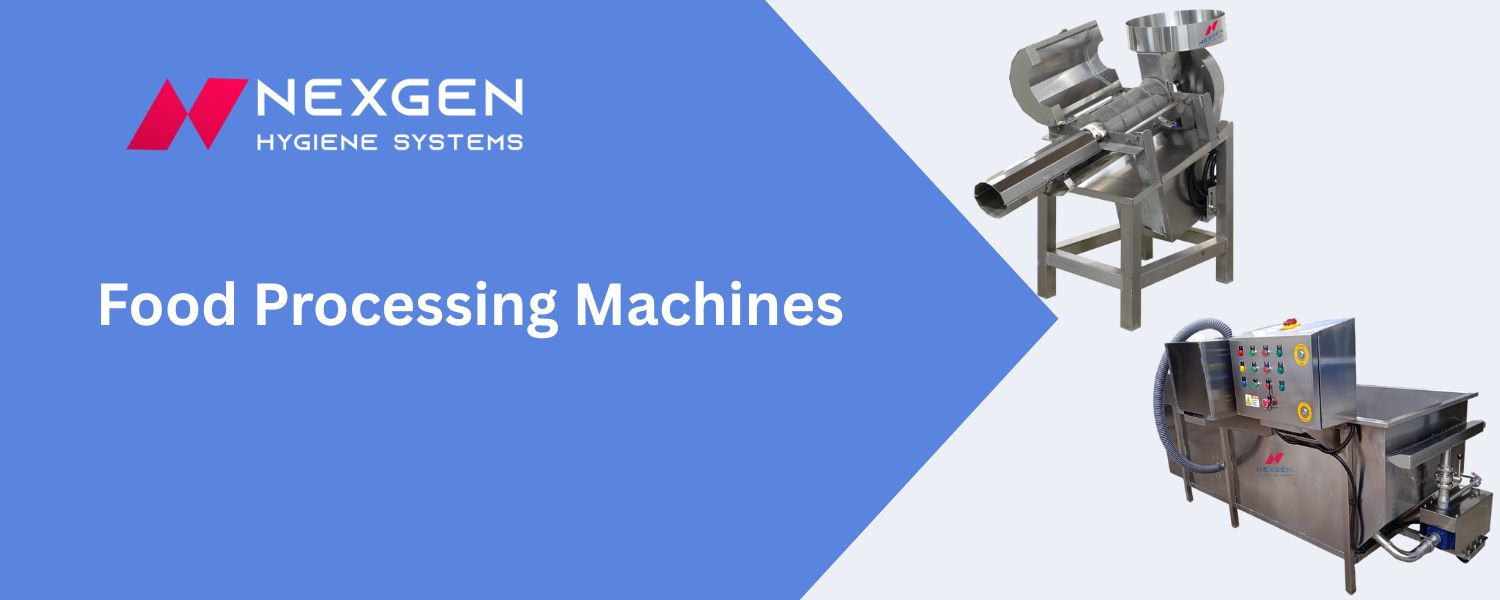
- vegetable washing units
- cutting and slicing machines
- batch processing systems
reduce dependency on large labour teams while keeping output stable.
Less Wastage
Manual cutting and handling lead to uneven sizes and material loss.
Automation ensures precision, which directly saves raw material costs.
Predictable Operating Costs
Once automated, manufacturers can forecast:
- output per hour
- energy consumption
- maintenance cycles
This predictability improves profitability.
Increasing Output Without Expanding Factory Space
One of the biggest misconceptions is that higher production needs bigger factories.
In reality:
- Automated machines process more volume in less space
- Line-based layouts improve flow
- Batch handling becomes faster and cleaner
For example, an automated vegetable processing line can handle multiple operations simultaneously, washing, sorting, and cutting, without adding extra manpower or square footage.
That’s how food plant efficiency improvement actually happens.
Smart Food Factories: The New Indian Reality
India is steadily moving towards smart food factories.
These plants are used:
- automated machinery
- data-driven controls
- standardized processes
The focus is not just speed, but consistency.
Smart food factories in India are already:
- reducing rework
- improving shelf life
- maintaining uniform taste and texture
This shift is critical for brands targeting national and international markets.
Automation's Role in Hygiene, Compliance & Quality
Food safety is no longer negotiable.
Automation helps by:
- reducing human contact with food
- standardizing wash cycles and sanitation
- maintaining controlled processing environments
Modern industrial food machinery in India is designed to support:
- FSSAI norms
- GMP standards
- ISO and export audits
Built-in cleaning systems and controlled workflows make compliance easier, not stressful.
Where Nexgen Machines Fits Into This Shift
This industry shift needs machines designed for Indian conditions, not imported complexity.
Nexgen Machines focuses on:
- practical food processing automation
- scalable systems for Indian manufacturers
- hygienic, easy-to-maintain equipment
From vegetable processing solutions to integrated food plant machinery, Nexgen supports manufacturers who want:
- higher output
- lower operational cost
- better hygiene control
Without over-engineering or unnecessary complexity.
What the Next 5 Years Look Like for Food Processing in India
Looking ahead to 2026 and beyond:
- AI-assisted quality checks will become common
- Digitized food factories will reduce downtime
- Automation will move from “support” to “core operations.”
- Cost-efficient machines will dominate over labour-heavy processes
Manufacturers who adopt automation early will scale faster, while others will struggle to keep margins intact.
Want to stay ahead of industry trends?
Contact UsConclusion
The future of food processing in India is automated, efficient, and data-driven.
Automation is no longer about replacing people — it’s about:
- reducing cost
- increasing output
- improving hygiene
- maintaining consistent quality
For food manufacturers who want to grow sustainably, investing in modern food processing automation solutions is no longer a choice; it’s a necessity.
If you’re planning to upgrade your food processing line or build a smarter factory, Nexgen Machines can help you take the next step with the right equipment and industry-ready solutions.
FAQs
How does automation reduce production cost in food manufacturing?
Automation reduces labour dependency, minimizes raw material wastage, and ensures consistent output, leading to predictable and lower operating costs.
Is food processing automation suitable for mid-scale manufacturers in India?
Yes. Modern automated food processing machines are designed to be scalable and cost-effective for mid-scale and growing food businesses.
Does automation help with food safety compliance?
Absolutely. Automated systems reduce human handling, standardize cleaning processes, and support compliance with FSSAI, GMP, and ISO standards.
What type of food factories benefit most from automation?
RTE manufacturers, vegetable processors, frozen food units, central kitchens, and export-oriented food plants benefit the most.