
In modern food plants, drying is no longer a “final step”; it’s a critical quality checkpoint. Whether it’s washed vegetables, bottles, pouches, trays, or processed food components, residual moisture can silently damage hygiene, shelf life, and packaging integrity.
Traditional drying methods like blowers, hot air tunnels, and manual air guns were designed for a slower era. Today’s food industry demands speed, consistency, hygiene, and energy efficiency, and that’s exactly where air knife drying systems are redefining the game.
Why Traditional Drying Methods Are Failing Food Plants
Most food plants still rely on compressed air guns, blowers, or heat-based drying systems. While these methods work on paper, they create hidden operational issues:
- Inconsistent drying across products
- High power consumption
- Risk of contamination from manual handling
- Heat damage to sensitive food items
- Bottlenecks in high-speed production lines
As production volumes increase and hygiene standards tighten, these limitations become impossible to ignore.
What Is an Air Knife Drying System?
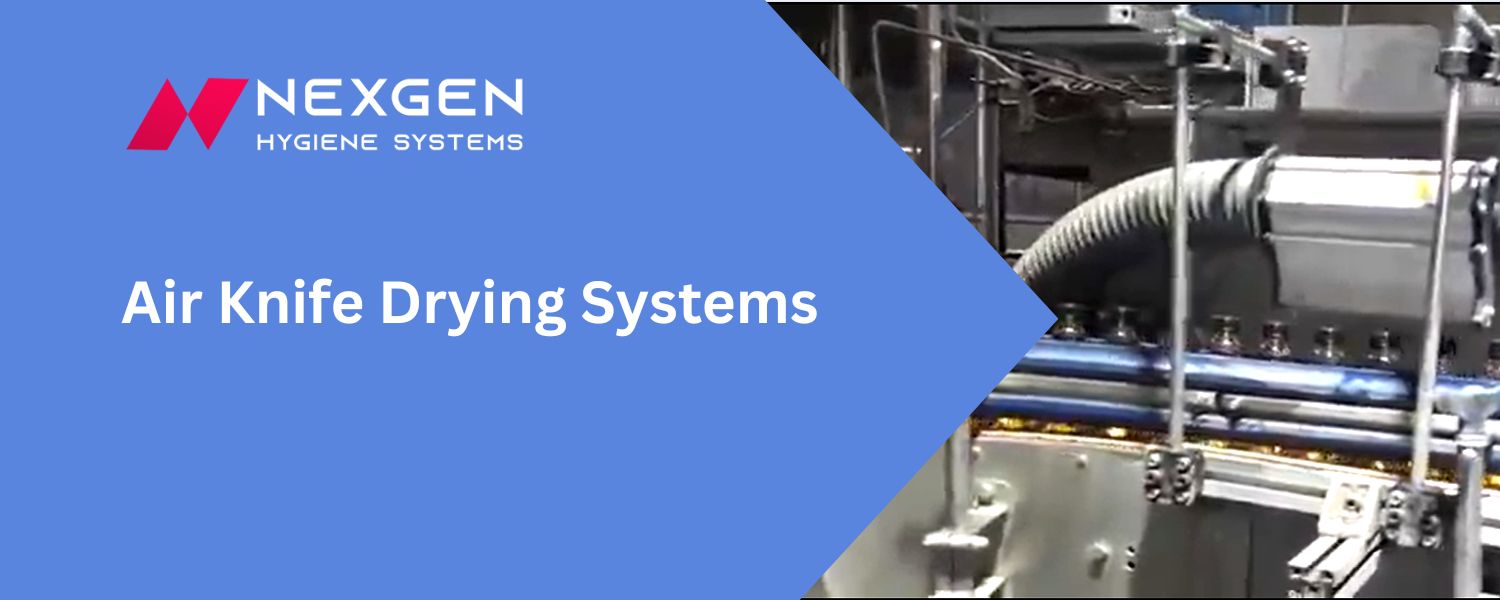
An air knife drying system uses a high-velocity, uniform sheet of air to remove moisture from surfaces quickly and evenly. Instead of scattered airflow, air knives deliver controlled, precision drying across the entire product width.
Key components include:
- Air knife blower system
- Precision-engineered air knife
- Filtration for food-grade airflow
- Controlled pressure and speed settings
This design makes industrial air knife systems ideal for continuous food processing lines.
How Air Knife Drying Solves Real Food Plant Problems
1. Faster Drying Without Heat Damage
Air knife blow-off systems remove surface moisture instantly, without exposing food products to excessive heat, perfect for fresh produce and delicate items.
2. Consistent Results at High Speed
Unlike manual or blower-based drying, air knives maintain uniform airflow, ensuring every product dries the same way, batch after batch.
3. Reduced Production Bottlenecks
High-speed industrial drying systems allow plants to move products directly from washing to packing without waiting time.
Hygiene & Food Safety Advantages
Hygiene is non-negotiable in food plants. Air knife systems support clean, contactless drying, reducing contamination risks.
Why food processors prefer air knives:
- Minimal human intervention
- No physical contact with food surfaces
- Compatible with SS food-grade conveyor systems
- Supports compliance with FSSAI, GMP & ISO norms
By eliminating manual air guns, plants significantly reduce cross-contamination risks.
Energy Efficiency & Cost Savings
One of the biggest misconceptions is that high-speed drying means high energy costs — air knives prove otherwise.
Energy-efficient drying solutions offer:
- Lower power consumption than heated dryers
- Optimized airflow instead of wasted air
- Reduced compressed air dependency
- Long-term operational savings
For plants processing high volumes daily, this translates into measurable cost reductions.
Air Knife Drying vs Traditional Drying Methods
| Factor | Traditional Drying | Air Knife Drying System |
|---|---|---|
| Drying Speed | Slow & uneven | High-speed & uniform |
| Energy Usage | High | Optimized & efficient |
| Hygiene | Manual handling | Contactless |
| Consistency | Operator dependent | Automated |
| Scalability | Limited | Easy to scale |
This is why many food plants are choosing to replace traditional drying methods with air knife technology.
Applications of Air Knife Systems in Food Processing
Air knife systems are widely used for:
- Vegetable & fruit surface drying
- Bottle & container drying before labeling
- Packaging film moisture removal
- Conveyor belt drying
- Bakery tray & utensil drying
Their flexibility makes them a core component of modern food processing drying equipment.
The Future of Drying Automation in Food Plants
Drying is moving towards automation-first workflows.
Next-generation drying technology trends include:
- Automated airflow control based on product type
- Integration with washing & processing lines
- Smart moisture control in food processing
- Lower carbon footprint drying systems
As food plants aim for higher efficiency and sustainability, air knife drying systems will become a standard, not an upgrade.
Learn more about advanced food processing solutions at
Learn MoreConclusion
Drying may seem like a small step, but in food processing, it directly impacts quality, hygiene, speed, and profitability.
Air knife drying systems offer a smarter, faster, and cleaner alternative to outdated drying methods. With benefits like energy efficiency, consistent drying, improved hygiene, and automation readiness, they are shaping the future of food plant operations.
If you’re planning to upgrade or optimize your drying process, exploring industrial air knife systems from Nexgen Machines can help align your plant with modern food processing standards.
FAQs
What is an air knife drying system used for in food plants?
Air knife drying systems are used to remove surface moisture from food products, containers, and packaging materials quickly and hygienically.
Are air knife systems energy efficient?
Yes, they use optimized airflow instead of heat, making them more energy-efficient than traditional drying methods.
Can air knives replace manual drying completely?
In most food processing applications, air knife systems can fully replace manual air guns and blowers.
Are air knife drying systems safe for food contact zones?
When designed with food-grade materials and filtration, they are fully suitable for hygienic food plant environments.