

Client
Frozen Food Manufacturer

Industry
Frozen Vegetables & Food Processing

Challenge
Fragmented preprocessing operations increased labour requirements, slowed production flow, and raised processing costs.
Overview
A frozen food manufacturer was looking for a better way to process vegetables before freezing and further production. Using separate machines and moving products by hand between washing, peeling, cutting, and inspection caused delays and slowed down the workflow.
The manufacturer turned to Nexgen for a solution that would make these steps more efficient and cut down on manual work. Nexgen set up a complete food processing line that brought all the preparation stages together in one smooth workflow.
The solution delivered two measurable improvements: a 40% reduction in vegetable preprocessing operating costs and an 85% reduction in labour requirements.
Key challenges
Fragmented Preprocessing Workflow
Separate processing operations made it difficult to maintain a smooth production flow. Moving vegetables between machines added handling time and slowed down the overall process.
High Labour Dependency
Manual material transfers and handling across processing stages required a larger workforce, increasing labour costs and dependence on worker availability.
Rising Operating Costs
Inefficient material movement and labour-intensive preparation increased the operating costs of vegetable preprocessing, making the existing setup expensive to maintain.
Limited Coordination Between Machines
Individual machines handled specific operations, but the overall workflow lacked coordination. This affected how efficiently the processing stages worked together.
Solution: Nexgen’s Integrated Food Processing Line
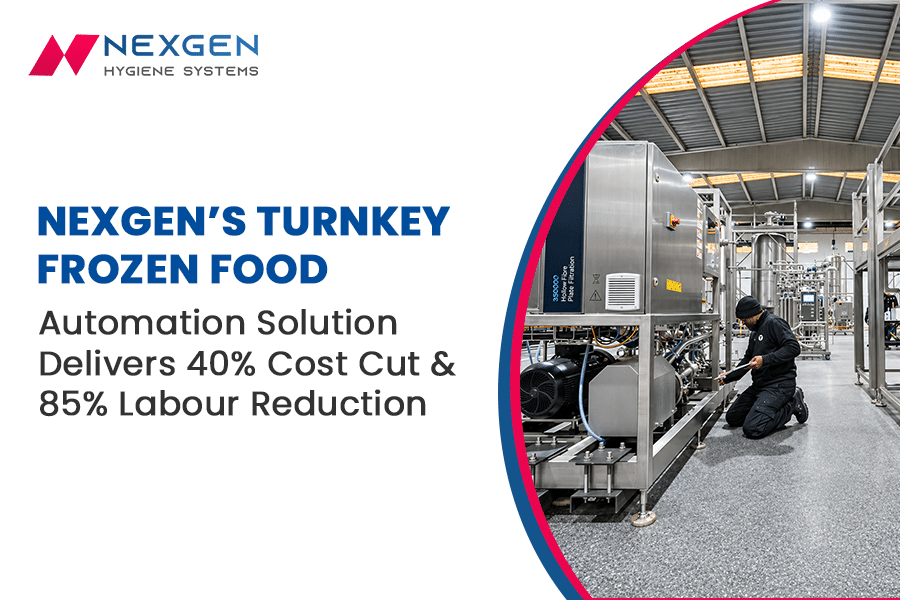
Nexgen set up an integrated processing system that connected all the vegetable preparation steps in a coordinated order. The main goal was to improve how materials moved through the process and cut down on manual work between steps.
Integrated Vegetable Preprocessing
The supplied machines supported the vegetable preparation workflow, bringing multiple processing operations into a more organised sequence and reducing unnecessary movement between stages.
Equipment and Workflow Integration
Rather than treating each machine as an independent workstation, Nexgen considered how the equipment would function together within the manufacturer’s existing production requirements.
.
Reduced Manual Handling
Coordinating the processing stages reduced the need for workers to transfer and handle vegetables repeatedly. This helped lower labour requirements and improve workflow continuity.
Implementation
The project brought all the processing steps together into one coordinated production sequence, achieving the goal of automation in frozen food manufacturing to support routine production, cleaning, and maintenance.
Phase 1: Processing Workflow Assessment
The existing preprocessing operations were reviewed to identify labour-intensive activities, workflow inefficiencies, and opportunities to improve material movement.
Phase 2: Equipment Selection and Line Integration
Multiple food processing machines were supplied and configured around the manufacturer’s vegetable preparation requirements to improve coordination between processing stages.
Phase 3: Commissioning and Handover
The equipment was commissioned as part of the preprocessing setup, with operational requirements addressed.
Measurable results
40% Reduction in Processing Costs
After installing the integrated line, the manufacturer cut processing costs by 40%. This result shows how streamlining the workflow and reducing inefficiencies can save money.
85% Reduction in Labour Requirements
Labour needs dropped by 85% in the areas improved by the project. By cutting down on manual transfers and better coordinating the steps, fewer workers were needed for preparation.
Better Coordination Across Processing Stages
Multiple food processing machines working within a coordinated setup improved the flow of vegetables through the preparation stages, addressing inefficiencies associated with separate workstations.
A More Efficient Production Setup
Lower preprocessing operating costs and labour requirements gave the manufacturer a more efficient production setup, supporting its frozen food manufacturing operations.
Takeaway
By switching from separate processing steps to an integrated production line, the frozen food manufacturer cut processing costs by 40% and labour needs by 85%.
If your business is looking at turnkey food processing solutions, connecting the preparation steps can help cut down on manual work and make coordination easier. The best setup will depend on your products, production needs, and facility layout.
We design food processing machines and integrated solutions for manufacturers who want to make their production more efficient.
If you’re looking at food manufacturing equipment in India, Nexgen can help you review your processing needs and find the right setup for your facility.
Looking to Reduce Processing Costs and Labour Requirements?
High labour requirements and disconnected processing operations can increase production costs. Nexgen’s food processing line solutions help manufacturers streamline vegetable preparation with equipment configured around their operational needs.
Contact Nexgen Hygiene Systems Discuss Your Processing Line
Note: For confidentiality reasons, the client’s actual name has not been disclosed in this case study. The company is represented as a large-scale packaged juice and RTD beverage manufacturer in India. All challenges, implementation details, and performance results are based on real deployment data and verified operational outcomes.
Note: For confidentiality reasons, the client’s actual name has not been disclosed in this case study. The company is represented as a multi-location bakery manufacturing chain in India. All challenges, implementation details, and performance results are based on real deployment data and verified operational outcomes.